
Navigating the Seasons of Care: From Independence to Comprehensive Support
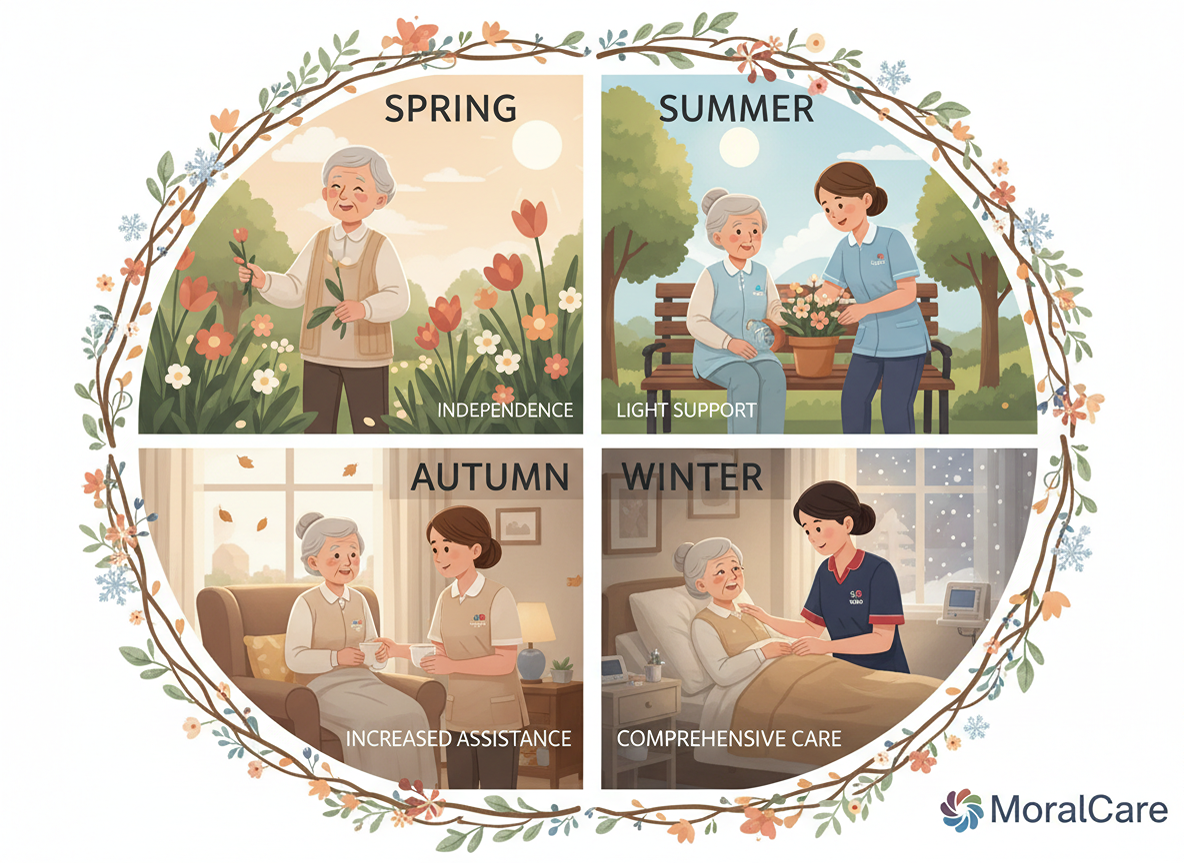
Care needs rarely emerge suddenly. More often, they develop gradually over months and years, requiring families to navigate changing levels of support. Understanding this journey—and knowing when to adjust care—helps families make proactive decisions rather than reactive ones during crises.
The Seasons of Care: Understanding the Journey
Like seasons, care needs transition gradually, each phase flowing naturally into the next.
Spring: Thriving Independence with Occasional Support
This early season involves robust independence with occasional assistance for specific tasks that have become challenging.
What It Looks Like: Living independently, managing most daily tasks without help, perhaps needing help with heavy housework, garden maintenance, or transportation to appointments. Social life remains active, health is generally stable, and the person maintains strong autonomy.
Appropriate Support: Light domestic help weekly or fortnightly, occasional transportation assistance, help with tasks requiring strength or mobility like changing bed linens or reaching high shelves, and perhaps companionship visits to combat emerging isolation.
The Goal: Maintaining independence while preventing exhaustion from tasks that have become difficult. This support preserves energy for activities that bring joy and meaning.
Summer: Active Life with Regular Support
This season involves continued independence with more regular support becoming helpful.
What It Looks Like: Managing most personal care independently but benefiting from regular assistance. Perhaps needing help with meal preparation, medication management, more frequent housework support, and regular companionship. Mobility might be declining slightly, requiring walking aids or assistance with outings.
Appropriate Support: Regular domestic support several times weekly, meal preparation assistance, medication management and monitoring, companionship and social engagement, assistance with shopping and errands, and support with personal care tasks as needed.
The Goal: Supporting continued independence and active engagement with life while ensuring safety, nutrition, and health management. This season can last many years with appropriate support.
Autumn: Increasing Needs with Comprehensive Support
This season involves significant care needs while maintaining quality of life and dignity.
What It Looks Like: Requiring daily assistance with personal care, meals, and medication. Mobility is limited, perhaps requiring wheelchairs or significant assistance. Cognitive changes might be emerging. Safety supervision becomes important. Social engagement requires facilitation and support.
Appropriate Support: Daily care visits, comprehensive personal care assistance, full meal preparation and feeding support if needed, complete medication management, mobility assistance and transfer support, cognitive engagement and dementia care if appropriate, and safety monitoring throughout the day.
The Goal: Maintaining dignity, comfort, and quality of life while ensuring safety and meeting all physical needs. Supporting continued engagement with life despite increasing limitations.
Winter: End-of-Life Care with Comfort and Dignity
This final season focuses on comfort, dignity, and ensuring no one faces their final journey alone.
What It Looks Like: Significant physical decline, requiring comprehensive assistance with all activities. Focus shifts from maintaining function to ensuring comfort, managing symptoms, and providing emotional and spiritual support. Family support becomes crucial as they navigate grief and difficult decisions.
Appropriate Support: Round-the-clock care if needed, comprehensive personal care with exceptional gentleness, symptom management and comfort measures, emotional and spiritual support, family support and respite, and compassionate presence ensuring dignity and peace.
The Goal: Ensuring comfort, maintaining dignity, preventing suffering, and providing the profound gift of not being alone. Supporting families through this sacred time. 🍂
Recognizing When Seasons Are Changing
Transitions between seasons aren't always obvious. Recognizing signs helps families adjust support proactively.
Physical Changes: Declining mobility or increased falls, weight loss or changes in eating habits, declining personal hygiene or grooming, increased fatigue or reduced activity, or new medical diagnoses or hospitalizations.
Cognitive Changes: Increased confusion or memory problems, difficulty managing previously routine tasks, poor judgment or decision-making, getting lost in familiar places, or personality or mood changes.
Safety Concerns: Falls or near-falls increasing, leaving appliances on or other safety lapses, medication errors or missed doses, wandering or getting lost, or neglecting home maintenance creating hazards.
Social and Emotional Changes: Increased isolation or withdrawal, depression or anxiety, expressing feelings of being overwhelmed, family caregivers showing signs of burnout, or the person expressing they need more help.
When you notice these signs, it's time to reassess care needs and adjust support accordingly. 🔍
The Importance of Proactive Planning
Crisis-driven care decisions made in emergency departments or hospital discharge meetings are rarely ideal. Proactive planning allows for better outcomes.
Discuss Preferences Early: Have conversations about care preferences before crises occur. What matters most to your loved one? Where do they want to live? What are their priorities for quality of life? These discussions are difficult but invaluable.
Financial Planning: Understand funding options including personal savings, benefits like Attendance Allowance, local authority support, and long-term care insurance. Early planning prevents financial crises.
Legal Preparations: Ensure powers of attorney are in place while your loved one has capacity to make these decisions. This allows trusted family members to make decisions if capacity is lost.
Care Provider Relationships: Establish relationships with care providers before urgent needs arise. Starting with light support allows relationships to develop, making transitions to increased care smoother.
Regular Reviews: Schedule regular care reviews—at least quarterly—to assess whether current support remains appropriate or needs adjustment. Don't wait for crises to trigger these conversations. 📋
Supporting Dignity Through All Seasons
Regardless of care level, maintaining dignity remains paramount.
Respecting Autonomy: Even with comprehensive care needs, individuals retain the right to make choices about their lives. Offer choices whenever possible—what to wear, what to eat, how to spend time. Respect preferences even when they differ from what you'd choose.
Maintaining Identity: People aren't defined by their care needs. Continue treating your loved one as the complex individual they've always been, with rich history, unique personality, and inherent worth.
Privacy and Modesty: Personal care requires exceptional sensitivity to privacy and modesty. Professional carers should always maintain dignity during intimate tasks, explaining what they're doing, moving at the person's pace, and never rushing.
Meaningful Engagement: Regardless of physical or cognitive limitations, everyone deserves engagement, stimulation, and connection. Adapt activities to current abilities rather than abandoning them entirely.
Communication: Speak to people, not about them. Include them in conversations even if cognitive impairment limits participation. Tone, touch, and presence communicate respect even when words fail. 💙
Family Caregiver Journey Through the Seasons
Family members experience their own journey as care needs evolve.
Early Seasons: Family caregivers often manage alongside their own careers and families. The challenge is balancing multiple responsibilities without neglecting their own wellbeing or relationships.
Middle Seasons: As care needs increase, family caregivers face difficult decisions about how much they can realistically provide. Guilt often accompanies decisions to seek professional support, even when it's clearly necessary.
Later Seasons: Comprehensive care needs often exceed what family members can provide, even with the best intentions. Professional support becomes essential, not optional. Families shift from providing direct care to overseeing care and maintaining emotional connections.
Final Season: End-of-life care brings profound grief even before death occurs. Families need support navigating medical decisions, managing their own emotions, and preparing for loss.
Throughout all seasons, family caregivers need support, respite, and permission to acknowledge that seeking help isn't failure—it's wisdom. 👨👩👧
How Professional Care Adapts Through Seasons
Quality care providers adapt support as needs change, providing continuity through transitions.
Flexible Care Plans: Care plans should be living documents, reviewed and adjusted regularly. What worked six months ago might not work now. Good providers adapt seamlessly.
Increasing Hours Gradually: Rather than sudden jumps from minimal to comprehensive care, gradual increases allow everyone to adjust. Perhaps starting with twice-weekly visits, then adding days, then increasing visit length as needs grow.
Consistent Carers Through Transitions: Having the same carers through changing seasons provides invaluable continuity. They notice changes, understand history, and provide emotional stability during difficult transitions.
Specialized Skills: As needs become more complex, carers with specialized training in dementia care, end-of-life care, or specific medical needs become important. Quality providers ensure staff have appropriate expertise.
Family Partnership: Throughout all seasons, professional carers should work in partnership with families, communicating openly, welcoming input, and supporting family involvement in whatever ways feel meaningful. 🤝
The Moral Care Approach to Changing Needs
At Moral Care, we understand that care is a journey, not a destination.
Starting Where You Are: We meet you wherever you are in your care journey, providing exactly the support you need now—whether that's light domestic help or comprehensive personal care.
Growing With You: As needs change, we adapt seamlessly. You won't need to find new providers as care needs increase; we'll adjust our support to match your evolving needs.
Consistent Relationships: Our commitment to carer continuity means the same trusted carers support you through changing seasons. These relationships provide stability during transitions.
Honest Communication: We communicate openly about changes we observe and support families in making difficult decisions. We provide guidance without pressure, respecting that families need time to process and decide.
Comprehensive Services: From light domestic support to comprehensive dementia care to end-of-life support, we provide the full spectrum of care. You won't outgrow our services as needs increase.
Dignity Always: Regardless of care level, we maintain unwavering respect for dignity, autonomy, and individual worth. Physical or cognitive changes never diminish human value, and our care reflects this belief. 💚
Planning for Winter: End-of-Life Considerations
While difficult to contemplate, planning for end-of-life care ensures wishes are honored and suffering is minimized.
Advance Care Planning: Document preferences about medical interventions, resuscitation, hospital transfers, and care priorities. These conversations are gifts to family members who might otherwise agonize over decisions.
Preferred Place of Care: Many people prefer dying at home rather than in hospitals. With appropriate support, this is often possible and provides comfort and dignity.
Symptom Management: Professional carers trained in end-of-life care can manage symptoms, provide comfort measures, and recognize when medical intervention is needed.
Emotional and Spiritual Support: End-of-life care includes emotional and spiritual support for both the dying person and their family. This might include facilitating visits from religious leaders, supporting legacy work like life story recording, or simply providing compassionate presence.
Family Support: Families need support during this sacred time—respite when exhausted, guidance about what to expect, and compassionate care for their loved one that allows them to focus on emotional connection rather than physical tasks.
Bereavement Support: Quality care providers offer support after death, helping families with immediate practical needs and providing emotional support during early grief. 🕊️
Embracing Each Season Fully
Rather than viewing declining independence as tragedy, we can embrace each season for what it offers.
Spring and Summer: Celebrate continued independence and active engagement. Make the most of abilities while they remain strong. Create memories, pursue interests, and savor good health.
Autumn: Find meaning in different ways. Physical limitations don't eliminate joy, connection, or purpose. Adapt activities and expectations while maintaining engagement with life and relationships.
Winter: This final season offers opportunities for life review, healing relationships, expressing love, and facing death with dignity and peace. With appropriate support, this can be a sacred time rather than just a medical event.
Each season has value. Each season deserves support that honors the person's humanity, maintains dignity, and supports the best possible quality of life. 🌈
Moving Forward with Confidence
Navigating changing care needs feels overwhelming, but you don't have to do it alone.
At Moral Care, we're experienced guides through all seasons of care. We've walked this journey with countless families, providing expert care delivered with genuine compassion.
Whether you're just beginning to consider light support or facing comprehensive care needs, we're here to help. We offer consultations to assess needs, discuss options, and create care plans that support your loved one through whatever season they're experiencing.
We understand that each person's journey is unique. We adapt to individual needs, preferences, and circumstances rather than offering one-size-fits-all solutions.
Most importantly, we see your loved one as a whole person—not just their care needs. We honor their history, respect their dignity, and support their quality of life through every season.
Because everyone deserves care that adapts to their changing needs while maintaining their humanity, dignity, and connection to what makes life meaningful.
At Moral Care in Morecambe, Heysham, and Lancaster, we're honored to provide that care—through all seasons, with unwavering respect and genuine compassion. 💙🌟✨
Comments