
Alzheimer's Disease vs. Other Dementias: Understanding the Differences
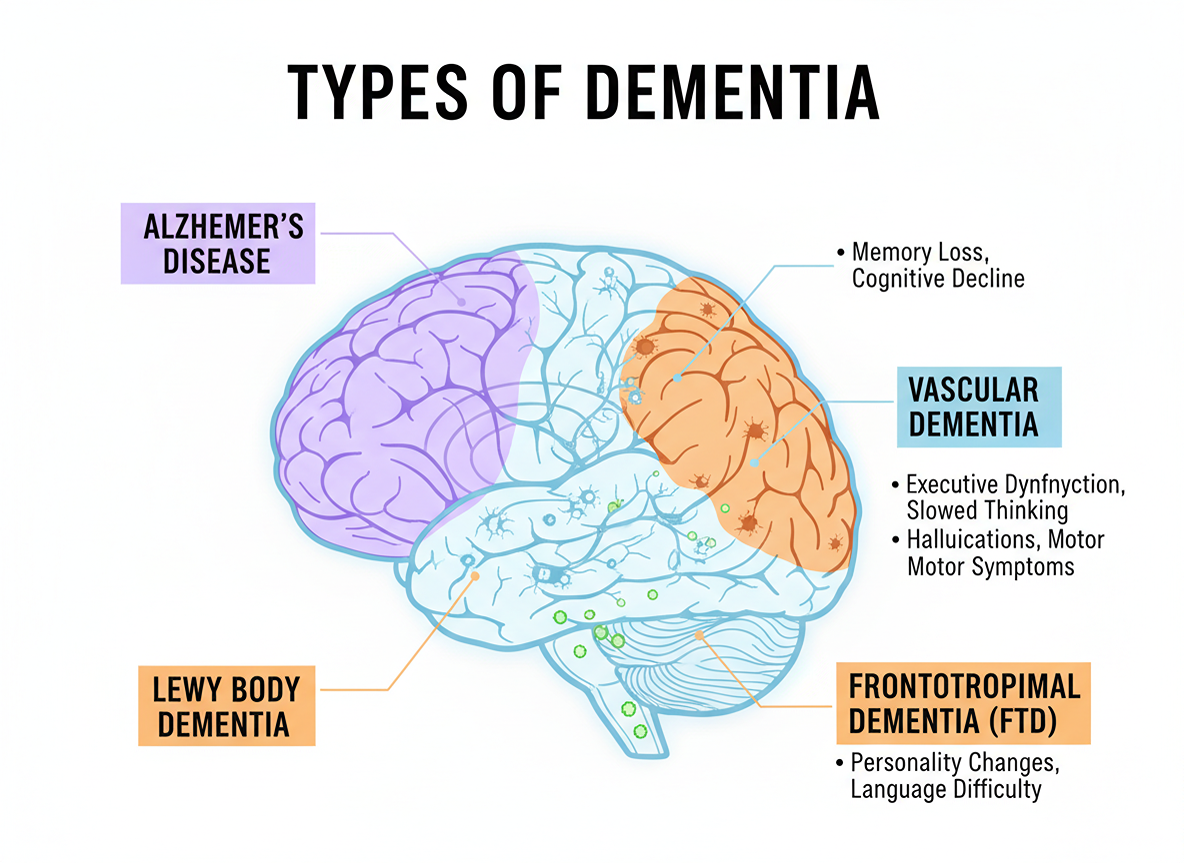
Dementia is an umbrella term for progressive cognitive decline, but not all dementias are the same. Alzheimer's disease accounts for 60-80% of dementia cases, yet other types present differently and require tailored approaches. Understanding these differences helps families access appropriate support and care strategies.
Alzheimer's Disease
Alzheimer's is characterised by the accumulation of amyloid plaques and tau tangles in the brain, leading to nerve cell death. It typically progresses through three stages: mild (early memory loss, difficulty with complex tasks), moderate (increased confusion, behavioural changes, need for assistance), and severe (loss of communication, full dependence on care).
Early signs include repeated questions, misplacing items, difficulty with familiar tasks, and subtle personality changes. Progression is gradual, typically over 8-10 years, though this varies considerably.
Vascular Dementia
Vascular dementia results from reduced blood flow to the brain, often following stroke or due to small vessel disease. Unlike Alzheimer's gradual decline, vascular dementia can progress in sudden steps after mini-strokes.
Symptoms include memory loss, difficulty with planning and organisation, and mood changes. People often retain insight into their condition longer than with Alzheimer's, which can be emotionally challenging. Blood pressure management and stroke prevention are crucial.
Lewy Body Dementia
Lewy body dementia involves abnormal protein deposits (Lewy bodies) in the brain. It uniquely features visual hallucinations (often detailed and non-threatening), movement problems similar to Parkinson's disease, and fluctuating alertness.
People may see animals, people, or objects that aren't there. These hallucinations are real to them and shouldn't be dismissed. Certain medications can worsen symptoms, requiring careful pharmaceutical management.
Frontotemporal Dementia
Frontotemporal dementia affects the front and side regions of the brain, causing personality and behaviour changes before memory loss. People may become socially inappropriate, lose empathy, or develop compulsive behaviours.
This type often strikes younger people (40s-60s) and progresses rapidly. Language difficulties are common, and insight is often lost early, making behaviour management particularly challenging for families.
Mixed Dementia
Many older adults have more than one type of dementia simultaneously. For example, Alzheimer's pathology combined with vascular changes is common. This complexity requires individualised assessment and flexible care approaches.
Why Diagnosis Matters
Accurate diagnosis enables targeted treatment, realistic expectations about progression, and appropriate care planning. Different dementias respond differently to medications and interventions. Understanding the specific type helps families anticipate challenges and access specialist support.
Supporting Someone with Dementia
Regardless of type, person-centred care, maintaining routines, clear communication, and managing the environment are universal principles. Specialist dementia support services, memory clinics, and dementia-trained care workers provide invaluable assistance.
Key Takeaways
Whilst all dementias involve cognitive decline, they differ significantly in cause, progression, and presentation. Understanding these differences enables families to access appropriate medical management, specialist care, and realistic support planning for their loved one's specific needs.
Comments