
Christmas Safety for Older People at Home: Fall Prevention, Fire Safety, and Heating Hazards
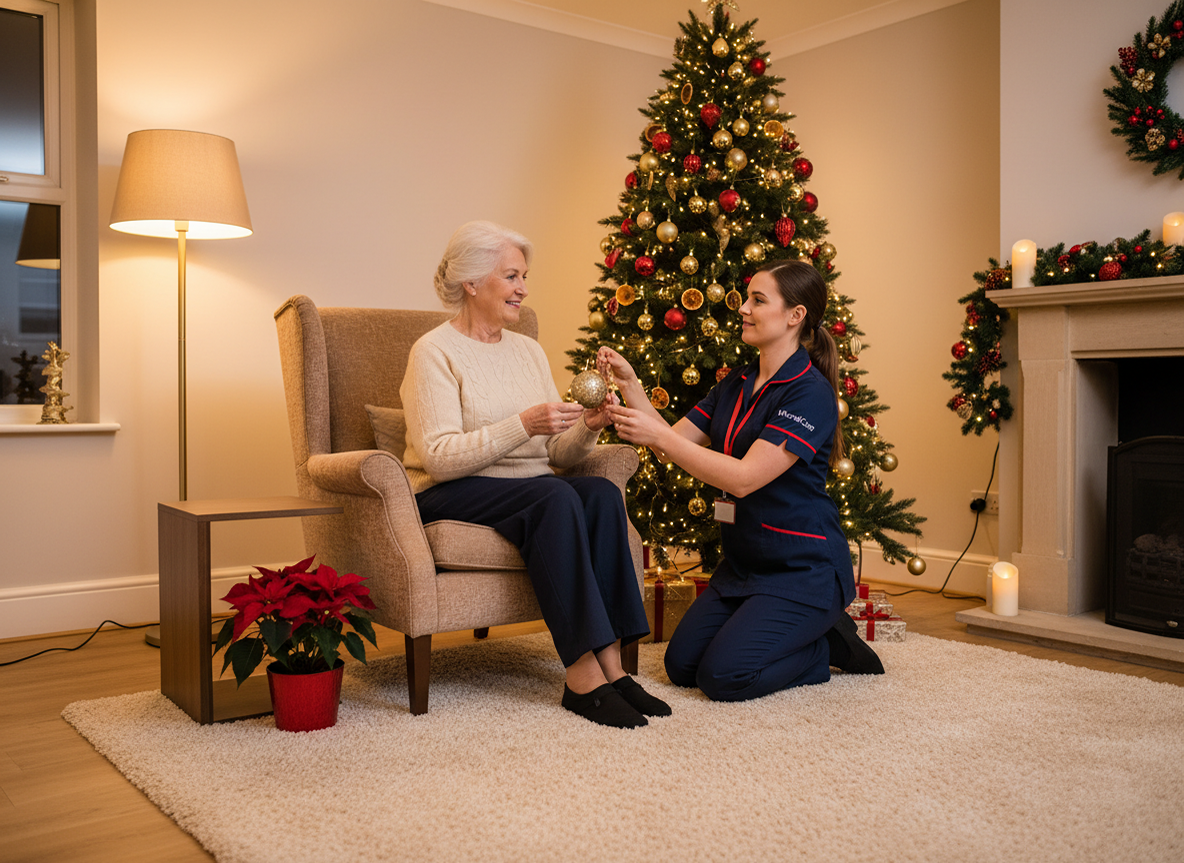
Christmas brings joy, celebration, and family gatherings—but it also introduces seasonal hazards that can pose serious risks to older people at home. Decorations, heating systems, and festive activities create an environment quite different from everyday routines. Understanding these risks and taking preventative measures ensures that older people can enjoy the festive season safely.
Fall Prevention During Christmas
Christmas decorations and festive preparations significantly increase fall risk for older people.
Clutter and obstacles. Christmas trees, decorations, wrapped presents, and festive displays create trip hazards. Trailing lights and extension cords become invisible obstacles, particularly for people with reduced vision or mobility.
Wet floors. Melting snow, wet coats, and festive drinks increase slipping risks. Bathrooms become more hazardous with additional guests using facilities.
Reaching and stretching. Hanging decorations, retrieving items from high shelves, and accessing festive supplies encourage unsafe reaching and stretching movements that increase fall risk.
Footwear changes. Festive slippers, new shoes, or going barefoot increases instability compared to regular supportive footwear.
Prevention strategies:
Keep pathways completely clear of decorations, presents, and clutter
Secure trailing lights and extension cords against walls
Use non-slip mats in bathrooms and kitchens
Ensure adequate lighting, particularly in hallways and stairs
Encourage appropriate footwear with good grip and support
Position Christmas tree securely so it cannot be knocked over
Avoid reaching for high items; use step stools with handrails or ask for assistance
Fire Safety and Heating Hazards
Christmas heating and decorations create fire risks that require careful management.
Increased heating use. Older people often run heating systems longer during winter, increasing fire risk if systems are not well-maintained. Blocked vents or faulty equipment become hazardous.
Christmas trees and decorations. Real Christmas trees dry out quickly indoors and become highly flammable. Decorations near heat sources create fire hazards. Lights with faulty wiring pose electrical risks.
Candles and open flames. Festive candles, log fires, and decorative lighting create burn and fire risks, particularly if older people have reduced mobility or cognitive impairment.
Cooking hazards. Festive cooking involves longer periods at the stove, increased use of ovens, and more complex meal preparation—all increasing fire risk.
Prevention strategies:
Have heating systems serviced before winter to ensure safe operation
Keep Christmas trees well-watered to prevent drying out
Position trees away from heat sources, radiators, and open flames
Use only tested, safe electrical decorations and lights
Check all lights for damage before use
Avoid candles; use battery-operated alternatives instead
Never leave cooking unattended
Keep fire extinguishers accessible and ensure older people know how to use them
Test smoke alarms and ensure they're working properly
Have a clear evacuation plan in case of emergency
Heating System Management
Older people are particularly vulnerable to cold-related illness, leading to increased heating use during winter. However, poorly maintained heating systems create hazards.
Carbon monoxide risks. Faulty boilers and heating systems can produce dangerous carbon monoxide. Symptoms include headaches, dizziness, and confusion—easily mistaken for other conditions in older people.
Dry air and respiratory issues. Excessive heating dries air and can exacerbate respiratory conditions common in older age.
Dehydration. Warm environments increase dehydration risk, particularly if older people don't increase fluid intake accordingly.
Prevention strategies:
Have boilers and heating systems professionally serviced annually
Install carbon monoxide detectors and check them regularly
Maintain adequate ventilation even when heating is running
Use humidifiers to counteract dry air
Encourage increased fluid intake when heating is in use
Set thermostats to safe, comfortable temperatures (around 21°C for living areas)
Festive Gatherings and Safety
Christmas often brings family visits and increased activity, which can create additional hazards.
Medication disruption. Busy schedules and routine changes can lead to missed medications or incorrect timing.
Increased activity. More people in the home, additional movement, and festive activities increase fall and accident risks.
Dietary changes. Rich festive foods can trigger digestive issues, medication interactions, or blood sugar fluctuations in people with diabetes.
Emotional stress. Family dynamics and festive pressure can increase anxiety and confusion, particularly for people with dementia.
Prevention strategies:
Maintain medication routines despite schedule changes
Keep pathways clear even with additional visitors
Ensure adequate seating and rest areas
Monitor dietary intake and maintain hydration
Keep festive celebrations calm and structured
Maintain familiar routines as much as possible
Creating a Safe Festive Environment
A safe Christmas for older people requires planning and awareness.
Before Christmas:
Service heating systems
Check and test all electrical decorations
Install or test smoke and carbon monoxide alarms
Plan layout to minimise fall hazards
Prepare accessible, safe decoration strategies
During Christmas:
Maintain clear pathways
Monitor heating and ventilation
Keep medications on schedule
Encourage hydration and balanced nutrition
Supervise cooking and open flames
Maintain familiar routines
After Christmas:
Safely remove decorations
Check heating systems for damage
Dispose of dried Christmas trees safely
Return to normal routines gradually
Key Takeaways
Christmas brings joy but also seasonal hazards for older people. Fall risks increase with decorations and clutter. Fire and heating hazards require careful management. Medication and routine disruptions need planning. By understanding these risks and taking preventative action, families and care providers can ensure that older people enjoy a safe, festive Christmas at home. Professional care support during this busy period helps maintain safety, medication adherence, and wellbeing whilst allowing older people to enjoy family celebrations.
Comments